
Why Does Skin Feel Dry Even After Applying Moisturizer?
You apply moisturizer, but your face still feels tight, rough or uncomfortable. Discover why dryness can persist, the mistakes that may be affecting your skin, and how a simple moisturizing routine can help.
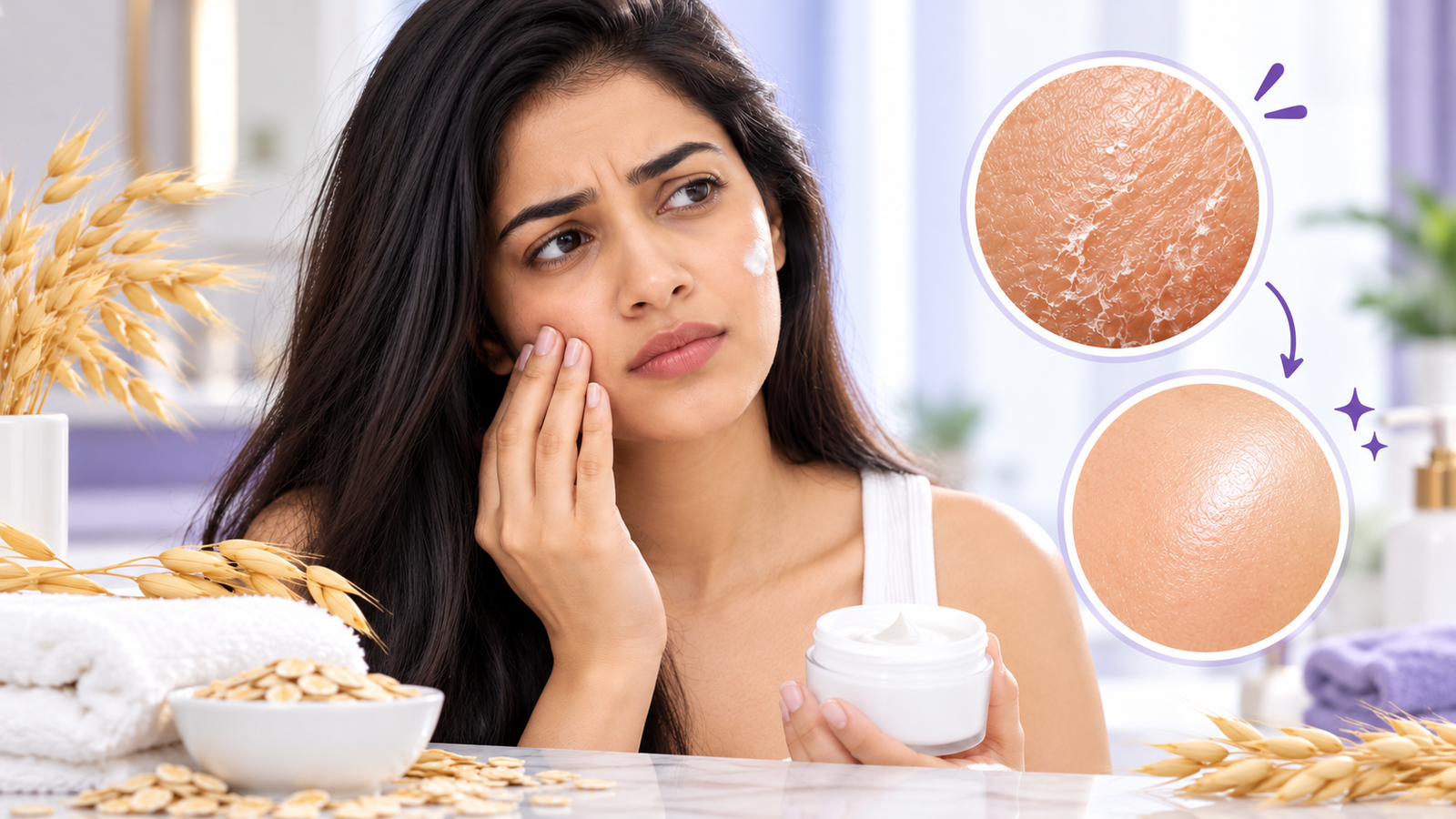
Moisturizer is one of the most familiar products in a skincare routine. We apply it expecting our skin to feel softer, smoother and more comfortable.
But what happens when that comfort disappears quickly? Your face may feel dry again within a short time, or certain areas may continue to feel rough despite regular moisturization.
The answer is not always to apply more product. Skin hydration and comfort depend on several factors, including cleansing habits, environmental conditions, moisturizer formulation and the condition of the skin barrier.
If your skin feels dry even after moisturizer, review your complete skincare routine rather than immediately adding more products.
Why Does Skin Stay Dry After Moisturizing?
A moisturizer can help reduce dryness, but it works within the larger context of your skincare habits and environment.
Harsh Cleansing Habits
Frequent washing, aggressive scrubbing or unsuitable cleansers may leave the skin feeling tight. Repeated irritation can make dryness more noticeable.
Dry Indoor Air
Air conditioning, indoor heating and low humidity can contribute to moisture loss, particularly when skin already feels dry.
Incorrect Application Habits
Using too little moisturizer, missing certain areas or delaying application after washing may reduce the comfort you experience.
Unsuitable Product Texture
A lightweight lotion may feel comfortable for some people, while others prefer a richer cream. The complete formulation matters more than texture alone.
Understanding the Skin Barrier
The outermost layer of your skin helps reduce water loss and provides protection against everyday environmental exposure.
When this protective function is disturbed, skin may feel dry, tight, rough or sensitive. Moisturizing products can help manage dryness, but gentle skincare habits are equally important.
Rather than changing several products at once, begin with a manageable routine that supports regular moisturization and avoids unnecessary irritation.
Five Common Moisturizing Mistakes
- Using very hot water: Hot water can contribute to skin dryness. Prefer lukewarm water during cleansing.
- Skipping moisturizer after washing: Applying moisturizer promptly to slightly damp skin can help support hydration.
- Overusing exfoliating products: Excessive exfoliation may contribute to irritation and tightness.
- Rubbing dry skin aggressively: Harsh scrubbing can worsen discomfort. Use gentle application techniques.
- Changing products too frequently: Constant switching makes it harder to understand what suits your skin.
OATMI's Approach to Moisturizing Care
OATMI Moisturizing Cream and Moisturizing Lotion feature Oatmeal Extract, Squalene and Pentavitin as part of their moisturizing formulations.
These ingredients contribute different functions within the complete product formulation.
Oatmeal Extract
An oat-derived ingredient used in skincare products focused on comfort and care for dry-feeling skin.
Squalene
An emollient component included to support the formulation's skin-softening and moisturizing properties.
Pentavitin
A moisture-focused ingredient incorporated into formulations designed to support skin hydration.
Product suitability depends on the complete formula and individual skin tolerance. Ingredient concentrations are not specified here.
A Simple Daily Routine for Dry-Feeling Skin
Cleanse Gently
Choose a suitable cleanser and use lukewarm water. Avoid repeated washing and aggressive rubbing.
Apply Moisturizer Promptly
After washing, gently pat the skin and apply moisturizer while it is still slightly damp.
Choose a Suitable Texture
Select a moisturizing cream or lotion based on your skin needs, comfort and product directions.
Use Sun Protection
During the day, use appropriate broad-spectrum sunscreen as part of your skincare routine.
Maintain Consistency
Follow a simple routine and pay attention to how your skin responds over time.
When Should You Consult a Dermatologist?
Occasional dryness can sometimes improve with changes in skincare habits. However, persistent symptoms should not be ignored.
Consult a qualified dermatologist if dryness is accompanied by persistent itching, painful cracks, bleeding, marked redness, oozing, significant scaling or symptoms that do not improve with gentle care.
Frequently Asked Questions
1. Why is my skin still dry after using moisturizer?
Possible causes include harsh cleansing, dry environmental conditions, product suitability or skin barrier irritation.
2. Should I apply moisturizer to damp skin?
Applying moisturizer to slightly damp skin after cleansing can help support hydration. Follow your product's usage instructions.
3. Is moisturizing cream better than lotion?
Creams often have a richer texture, while lotions may feel lighter. The better option depends on your skin and the complete formulation.
4. Can exfoliation make my skin feel dry?
Yes. Excessive exfoliation can contribute to irritation and dryness. Adjust frequency according to skin tolerance.
5. How often should I moisturize?
Many people moisturize after cleansing and whenever their skin feels dry. Individual needs can vary.
6. Can skin feel dehydrated even when it is oily?
Yes. Oil production and water content are different aspects of skin condition. Oily skin can also experience dehydration.
The Takeaway: Moisturize With Purpose
If your skin feels dry even after moisturizer, start by understanding the possible causes. Review cleansing habits, application timing, environmental factors and product suitability.
OATMI believes in a straightforward approach: understand your skin concern, choose suitable ingredients and maintain a consistent routine.
Explore OATMI Moisturizing Care
Discover OATMI Moisturizing Cream and Lotion, formulated with Oatmeal Extract, Squalene and Pentavitin for everyday moisturizing care.
EXPLORE OATMI PRODUCTS →Disclaimer: This article is for general skincare education only. It is not intended to diagnose, prevent or treat a medical condition. Consult a qualified dermatologist for persistent symptoms.