
Oily Skin but Still Dehydrated? Causes & Solutions
Does your face look shiny by afternoon but feel tight after washing? You may be dealing with excess surface oil and insufficient skin hydration at the same time.
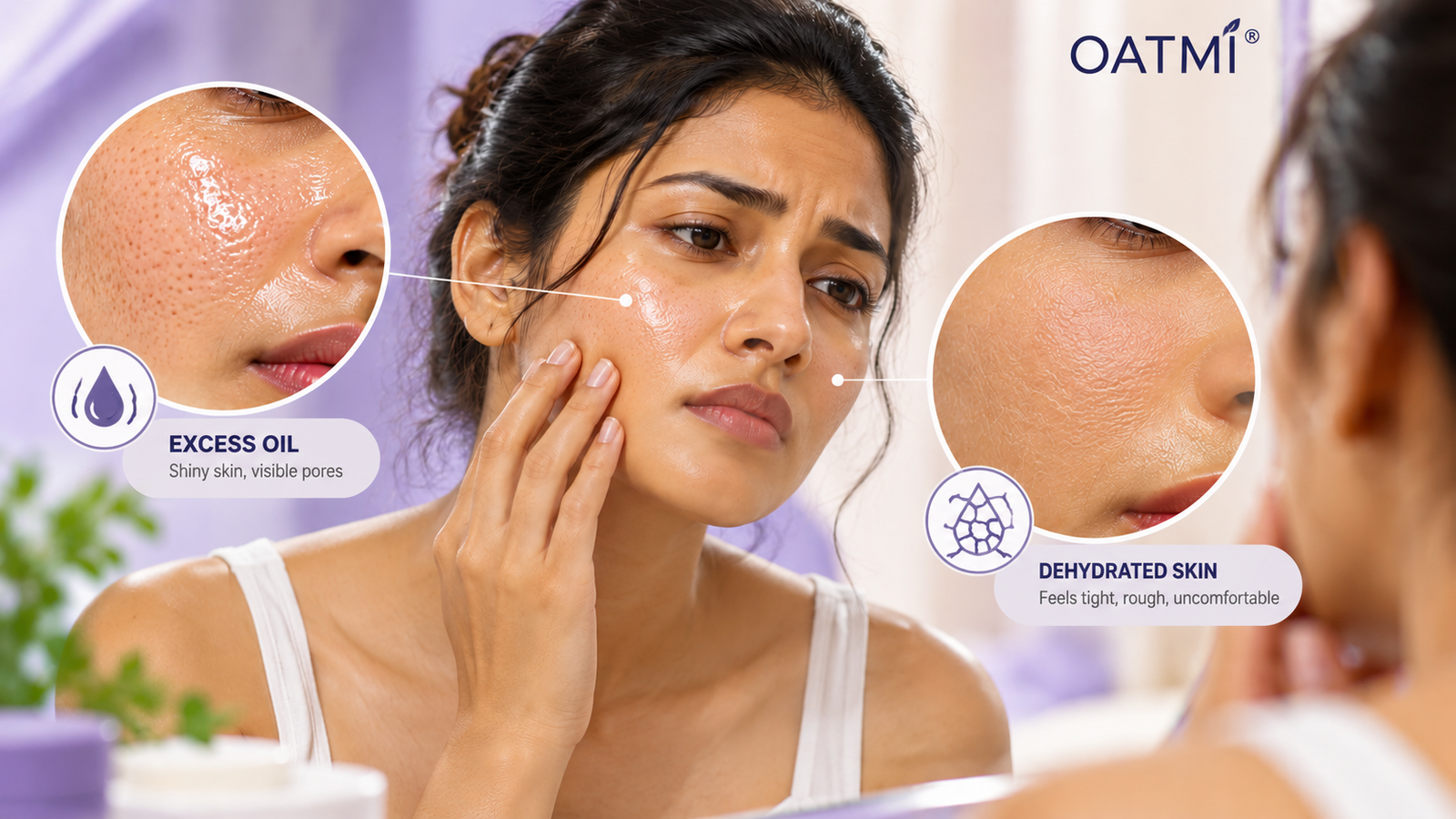
Many people associate oily skin with having plenty of moisture. If their forehead or nose looks shiny, they assume their skin cannot be dehydrated.
But skin oil and skin hydration are different. Sebum is the oily substance produced by sebaceous glands, while hydration refers to the water content of the skin.
This means your skin can produce noticeable oil while its outer layers still feel uncomfortable, tight or insufficiently hydrated.
The key idea:
Oily skin does not automatically mean well-hydrated skin. The goal is not to remove every trace of oil, but to keep cleansing, hydration and moisturization in balance.
Oily Skin vs Dehydrated Skin: What's the Difference?
Oily skin describes a skin type that tends to produce more sebum. Dehydration describes a condition in which the skin has insufficient water content.
Oily Skin
Often shows visible shine, especially around the forehead, nose and chin. Some people also notice more prominent-looking pores.
Dehydrated Skin
May feel tight, rough or uncomfortable. Fine dehydration lines can sometimes appear more noticeable.
The two can overlap. For example, a person may have a shiny T-zone and still experience tightness after using a strong cleanser.
Shine or tightness alone cannot establish a diagnosis. Irritation, environmental conditions and certain skin disorders may cause similar sensations.
Why Can Oily Skin Still Feel Dehydrated?
1. Over-cleansing
Washing repeatedly or using overly aggressive cleansing products can disturb the skin's surface balance. Skin may feel tight even when oil becomes visible again later.
2. Harsh exfoliation
Exfoliating acids and other active ingredients can be useful when chosen appropriately. However, excessive frequency or combining multiple strong products can increase dryness and irritation.
3. Skipping moisturizer
Some people avoid moisturizer because their skin already feels oily. Yet oily skin may still benefit from a comfortable moisturizer suited to its individual needs.
4. Environmental conditions
Air-conditioned rooms, dry weather and low humidity can contribute to water loss from the skin's surface.
5. An uncomfortable skin barrier
The outermost skin layer helps regulate water loss and protect against environmental irritants. When it is disrupted, the skin may feel less comfortable.
If your skin often feels dry immediately after cleansing, read our related guide: Why Skin Feels Dry After Face Wash .
Signs Your Oily Skin May Need More Hydration
These experiences may suggest that your routine needs adjustment:
- Your face looks shiny but feels tight after cleansing.
- Makeup appears uneven or settles around dry-looking patches.
- Your cheeks feel uncomfortable while your forehead remains oily.
- You notice occasional flaking alongside surface shine.
- Your skin feels less comfortable after applying multiple active products.
Remember: These signs are not specific to dehydration. Persistent flaking, burning, redness or itching can have other causes and may require professional evaluation.
Five Common Skincare Mistakes
Mistake 1: Trying to eliminate all oil
Sebum has a normal role in the skin's surface environment. A completely oil-free feeling is not necessarily the best goal.
Mistake 2: Washing too frequently
Repeated cleansing throughout the day may increase discomfort. Keep cleansing appropriate to your skin and daily activities.
Mistake 3: Using too many actives
Combining several exfoliating or acne-focused products without considering tolerance may make dryness and irritation more noticeable.
Mistake 4: Avoiding every moisturizer
Moisturization is not reserved for dry skin types. Product texture, quantity and individual tolerance matter more than the assumption that oily skin needs no moisture support.
Mistake 5: Changing products too quickly
Frequently switching products can make it difficult to identify what suits your skin. Introduce changes thoughtfully and monitor how your skin responds.
Ingredient Science: What Helps Support Hydration?
Moisturizing formulas may combine ingredients that attract water, soften the skin and help reduce moisture loss. The complete formulation matters more than any single ingredient.
Humectants
Ingredients such as glycerin and certain sugar-derived compounds help attract and retain water within the outer skin layers.
Emollients
Ingredients such as squalane help soften and smooth the skin, improving its comfortable feel.
Oat-Derived Ingredients
Oat-based ingredients are used in skincare formulations focused on skin comfort and moisturization. Their effects depend on the ingredient and finished formula.
Barrier-Supportive Formulas
Well-formulated moisturizers can help reduce the feeling of dryness and support the skin's normal protective function.
For oily skin, an effective moisturizer should also feel comfortable enough to use regularly. A rich texture is not automatically better, and a lightweight texture is not automatically insufficient.
A Simple Routine for Oily, Dehydrated-Feeling Skin
You do not need a complicated collection of products. Start with a few steps that have clear purposes.
Morning Routine
Cleanse Gently
Use a cleanser appropriate for your skin. Avoid unnecessarily harsh scrubbing or repeated washing.
Moisturize
Apply a comfortable moisturizer that supports everyday skin hydration without leaving an unpleasant finish.
Use Sunscreen
Choose appropriate broad-spectrum sun protection and follow its directions for application and reapplication.
Evening Routine
Remove the Day's Buildup
Cleanse away sunscreen, makeup and accumulated surface impurities without aggressive rubbing.
Use Targeted Actives Thoughtfully
If you use exfoliating or acne-care products, follow their directions and consider your skin's tolerance.
Finish with Moisturizer
Apply an appropriate moisturizer while the skin is slightly damp, if comfortable. Adjust the amount to your needs.
Routine principle: Cleanse appropriately, moisturize consistently and protect your skin during the day. Add targeted products only when they serve a clear purpose.
Where Does OATMI Moisturizing Cream Fit?
OATMI Moisturizing Cream SPF 15 is formulated with an oat-focused approach alongside Squalene and Pentavitin for everyday moisturization.
Oatmeal contributes to the brand's skin-comfort-focused formulation philosophy, while the supporting moisturizing ingredients are included to help maintain a comfortable skin feel.
If your skin is oily, consider whether the cream's texture and finish suit your preferences. Introduce it gradually if your skin is reactive.
Important: SPF 15 in a moisturizer should not automatically replace a dedicated sunscreen when higher or more comprehensive sun protection is needed.
Explore OATMI SkincareWhen Should You Consult a Dermatologist?
If your skin remains persistently uncomfortable despite a gentle routine, it is worth seeking professional advice.
Consult a qualified dermatologist if you experience persistent redness, burning, significant itching, cracking, painful breakouts or worsening flaking.
These symptoms can have causes beyond ordinary skin dehydration. Cosmetic moisturizers are not substitutes for diagnosis or treatment of a skin disorder.
Frequently Asked Questions
Can oily skin really be dehydrated?
Yes. Oily skin refers to sebum production, while dehydration relates to water content. A person can experience both at once.
Why does my oily skin feel tight after washing?
Tightness may be associated with aggressive cleansing, irritation or an uncomfortable skin barrier. Persistent symptoms deserve closer evaluation.
Should I moisturize if my face is already oily?
Oily skin may still benefit from an appropriate moisturizer. Choose a comfortable texture and adjust the amount according to your skin's response.
Does drinking more water fix dehydrated facial skin?
Adequate fluid intake supports general health, but drinking excessive water is not a proven substitute for suitable topical skincare or treatment of an underlying skin condition.
Can exfoliating too often make skin feel dehydrated?
Excessive exfoliation can contribute to irritation and dryness. Use exfoliating products according to directions and your individual tolerance.
How long does it take to improve dehydrated-feeling skin?
There is no universal timeline. Improvement depends on the cause, product suitability and consistency. Seek professional advice if symptoms persist or worsen.
Final Thoughts: Balance Matters More Than Shine
Having oily skin does not mean you should avoid every moisturizer or use the strongest cleanser available.
Instead, pay attention to how your skin feels, how it responds after cleansing and whether your routine provides appropriate moisture support.
A simple approach built around gentle cleansing, comfortable moisturization and daytime sun protection can be a practical starting point.
OATMI — SKINCARE without DRAMA.
Educational disclaimer: This article provides general cosmetic skincare information and is not a medical diagnosis or treatment recommendation. Individual skin needs vary. Consult a qualified dermatologist for persistent or concerning symptoms.