
White, Rough Skin Due to Dryness: What Your Skin Is Telling You
When skin becomes very dry, its surface can look dull, rough, flaky or temporarily whitish. Understanding why this happens is the first step toward building a more comfortable, moisture-focused skincare routine.
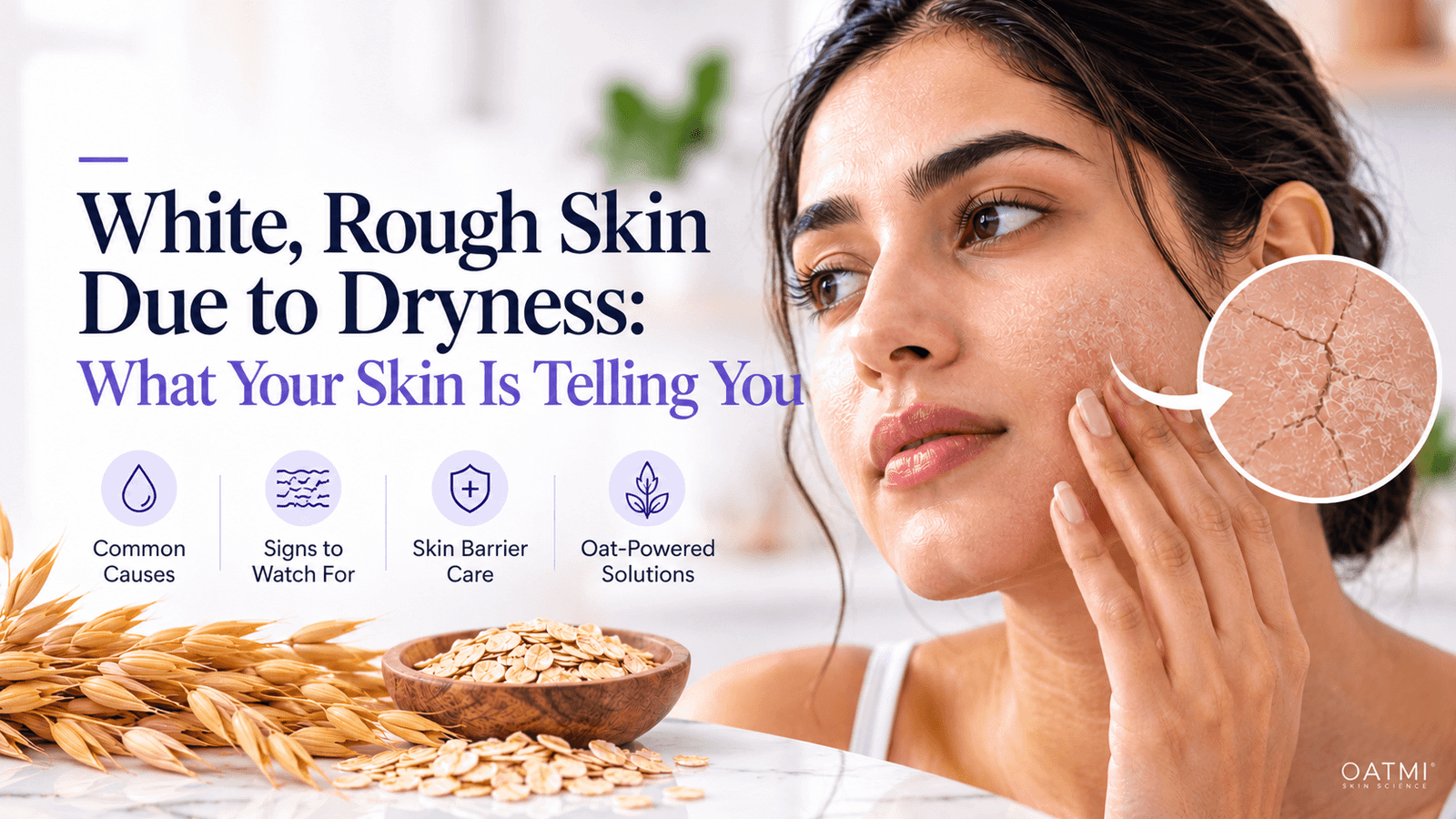
Have you noticed areas of skin that suddenly look white, rough, flaky or powdery, especially after bathing or during colder and drier weather?
Sometimes this appearance can be associated with very dry skin. When the outer surface lacks sufficient moisture, fine scaling can become more visible. Light reflecting from these dry surface scales may make the area look pale, greyish or temporarily whitish.
Dry skin is not just a cosmetic concern. Tightness, rough texture, flaking and discomfort can signal that your skincare routine needs greater attention to moisturization and skin barrier care.
When skin looks flaky or rough, the instinct to scrub away visible flakes can make an already uncomfortable surface feel worse. Begin by supporting moisture and treating your skin gently.
Why Can Dry Skin Look White or Rough?
Healthy-looking skin has a relatively smooth outer surface. When that surface becomes very dry, fine flakes and scales can become more noticeable.
These irregular surface scales scatter light differently, which can make dry areas look dull, ashy, pale or whitish. The skin may also feel rough when you run your fingers over it.
This is especially noticeable on areas such as the arms, legs, hands, elbows and other regions prone to dryness.
Flaky Appearance
Fine surface scales can become more visible when the outer skin lacks moisture.
Rough Texture
A dry surface may feel less smooth and more uneven to the touch.
Tightness
Dry skin can feel tight or uncomfortable, particularly after bathing or cleansing.
Ashy or Whitish Look
Visible surface scaling can sometimes create an ashy, pale or temporarily whitish appearance.
What Can Make Skin Dry?
Dryness can be influenced by both your environment and skincare habits. Sometimes several small factors combine to make the skin progressively drier.
Hot Showers
Long, very hot showers or baths can make already dry skin feel more uncomfortable.
Harsh Cleansing
Frequent washing or an unsuitable cleansing routine may contribute to dryness and tightness.
Weather & Environment
Cold weather, dry air and air-conditioned environments can make moisture loss more noticeable.
Skipping Moisturizer
Skin prone to dryness may benefit from consistent moisturization rather than waiting until visible flaking appears.
Understanding Your Skin Barrier
The outermost part of your skin plays an important role in limiting water loss and protecting underlying tissue from the external environment.
When skin becomes dry, supporting this outer layer becomes an important part of everyday care. This is why a moisturizer should do more than simply make the surface feel slippery.
A balanced dry-skin routine usually combines gentle cleansing, regular moisturization and protection from environmental stressors.
Why Oats Fit Dry-Skin Care
Oat-derived ingredients have a long history of use in topical skincare. They contain naturally occurring components studied in relation to moisturization, skin comfort and barrier-supportive care.
This scientific background is one reason oats sit at the heart of OATMI's skincare philosophy, particularly when the concern is dryness and skin comfort.
Oat-based skincare can be part of a moisture-focused routine, but no single ingredient guarantees that every case of roughness, itching or white-looking skin is simply dryness.
OATMI's Moisture-Focused Approach
OATMI Moisturizing Cream and Lotion are built around three key ingredients: Oatmeal Extract, Squalene and Pentavitin. Ingredient percentages are not stated because verified percentages have not been supplied.
A Simple Routine for Dry, Rough Skin
Dry-skin care does not have to involve a long list of products. Consistency with the fundamentals is a practical place to begin.
White Patches Are Not Always Dryness
This distinction is important. Dry, flaky skin can sometimes look whitish, but a true persistent loss or change of skin colour should not automatically be labelled as dryness.
Different skin conditions can produce lighter-looking patches, scaling, itching or pigmentation changes. The correct approach depends on the actual cause.
When Should You See a Dermatologist?
Seek professional assessment if a white or lighter patch persists despite moisturization, has a clearly defined border, spreads, repeatedly returns, becomes significantly itchy or inflamed, or is accompanied by cracking, pain, discharge or other changes.
Dry & Rough Skin: Frequently Asked Questions
Can dry skin look white?
Yes. Fine scaling on very dry skin can sometimes make the surface appear ashy, pale or whitish. Persistent true white patches can have other causes.
Why does my skin look white after a shower?
Dryness and visible surface scaling can become more noticeable after bathing, especially with very hot water or drying cleansers.
Should I scrub rough, flaky skin?
Avoid aggressive scrubbing. Strong physical exfoliation can add unnecessary friction when skin is dry or irritated.
What ingredients are in OATMI Moisturizing Cream?
Key ingredients include Oatmeal Extract, Squalene and Pentavitin.
How often should I moisturize dry skin?
Moisturize consistently according to your skin's needs and product directions. Applying moisturizer after cleansing or bathing is a practical approach.
When is rough skin more than ordinary dryness?
Persistent or worsening symptoms, significant itching, painful cracks, bleeding, spreading patches or distinct colour changes deserve professional assessment.
From Rough & Flaky to Moisture-Focused Care
When dryness makes your skin look white, ashy, flaky or rough, the answer is not automatically stronger exfoliation. Your skin may be telling you that it needs a gentler, more consistent moisture-focused routine.
OATMI Moisturizing Cream and Lotion bring together Oatmeal Extract, Squalene and Pentavitin as part of OATMI's oat-focused approach to everyday moisturizing care.
If a colour change persists or does not behave like ordinary dryness, do not keep treating it as dry skin. Have the cause properly assessed.
Concern first. Oat science. Focused care.
Give Dry Skin Moisture-Focused Care
Explore OATMI Moisturizing Cream, an oat-powered moisturizing formula with Oatmeal Extract, Squalene and Pentavitin.
EXPLORE OATMI MOISTURIZING CREAM →Individual results may vary. This article provides general skincare education and does not replace diagnosis or advice from a qualified healthcare professional.